
Research
Funding scientific work to improve treatment and move towards preventing and curing diabetes.
 COMMUNITY SPOTLIGHT · DIABETES UK
Learn about diabetes, discover the charity’s work and find practical support for yourself or someone you care about.
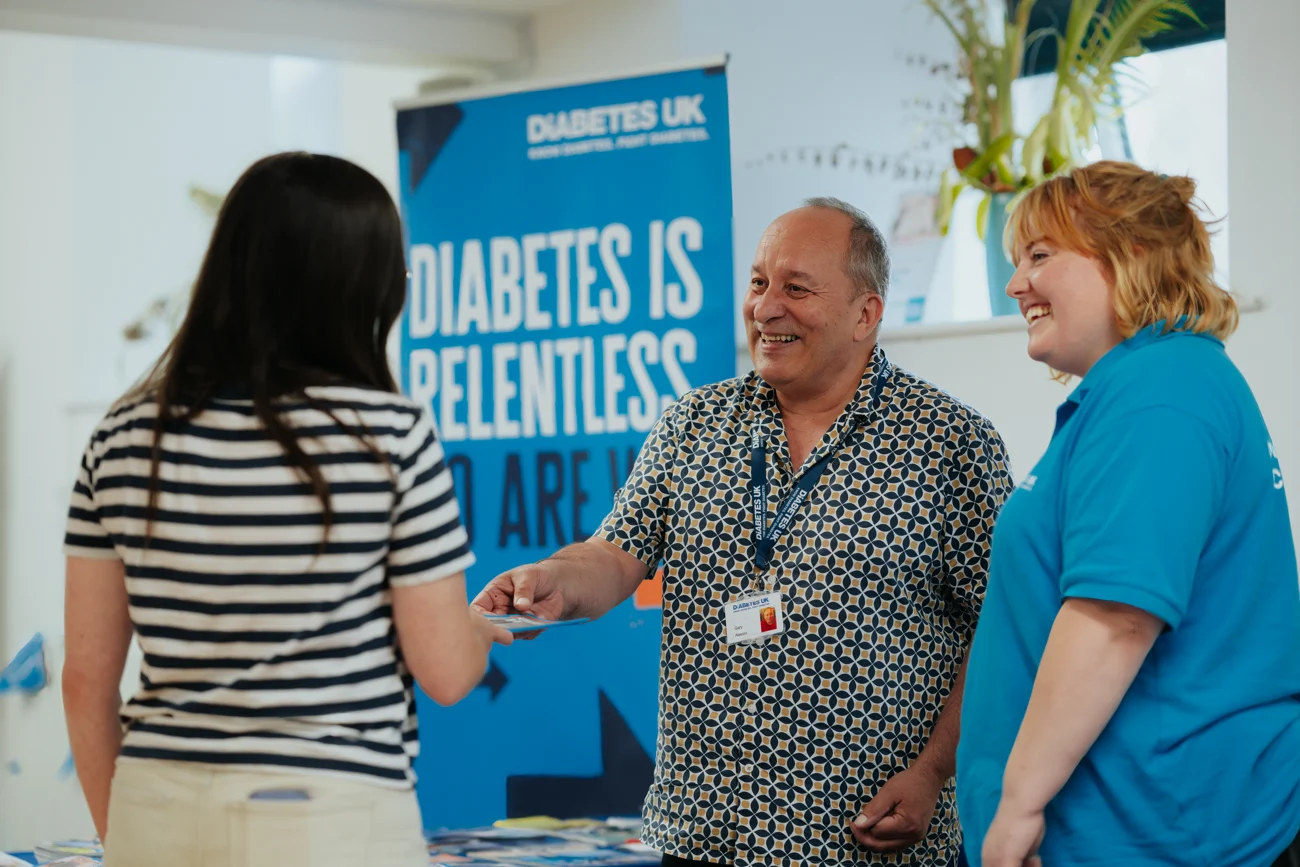
Diabetes UK works to improve life for people affected by diabetes. It funds research into treatments and a cure, campaigns for better care, and provides information and support when people need it.
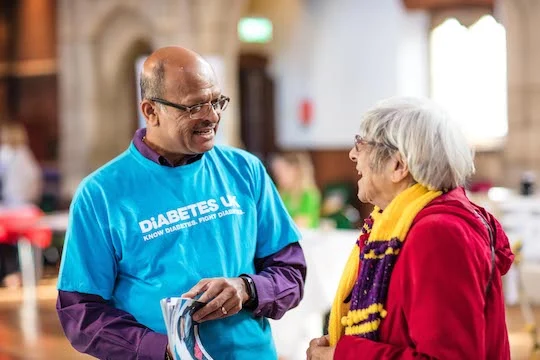
Funding scientific work to improve treatment and move towards preventing and curing diabetes.
Speaking up for people with diabetes and working to improve the care they receive.
Helping people understand their condition and find support with the challenges it can bring.
Diabetes causes blood glucose (blood sugar) to become too high. Insulin is the hormone that helps glucose enter our cells for energy. Diabetes develops when the body cannot make enough insulin, or cannot use it effectively.
The body cannot make insulin. People need insulin treatment. It can develop at any age and cannot currently be prevented through lifestyle changes.
Insulin does not work as well as it should, or the body cannot produce enough. A combination of factors affects risk. It can sometimes be prevented or delayed.
Gestational diabetes develops during pregnancy. There are other, less common types too. Diagnosis and treatment should be discussed with a healthcare professional.
All types are serious, but the right care and support can help people live well.
Read Diabetes UK’s guide to diabetes ↗ (opens in a new tab) · Learn about type 1 ↗ (opens in a new tab)
Risk is influenced by several factors, including age, family history and ethnicity. Some cannot be changed. Everyone deserves support, without blame or judgement.
These steps can reduce risk, but do not guarantee prevention. Type 1 diabetes cannot currently be prevented.
Explore Diabetes UK’s prevention advice ↗ (opens in a new tab)
Possible symptoms include needing to urinate more often, unusual thirst, tiredness and unexplained weight loss. Blurred vision and slow-healing cuts can also occur. Some people have no obvious symptoms.
Contact your GP and ask about a blood test. If symptoms appear quickly or you feel very unwell, seek an urgent GP appointment or call NHS 111. This applies to children as well as adults.
A donation can support the charity’s research, campaigning and services for people affected by diabetes.
Donate on Diabetes UK’s website ↗ (opens in a new tab)Choose a one-off or regular donation on the charity’s official website. Your donation is made directly to Diabetes UK, not through UC Beds.